Overview
Background
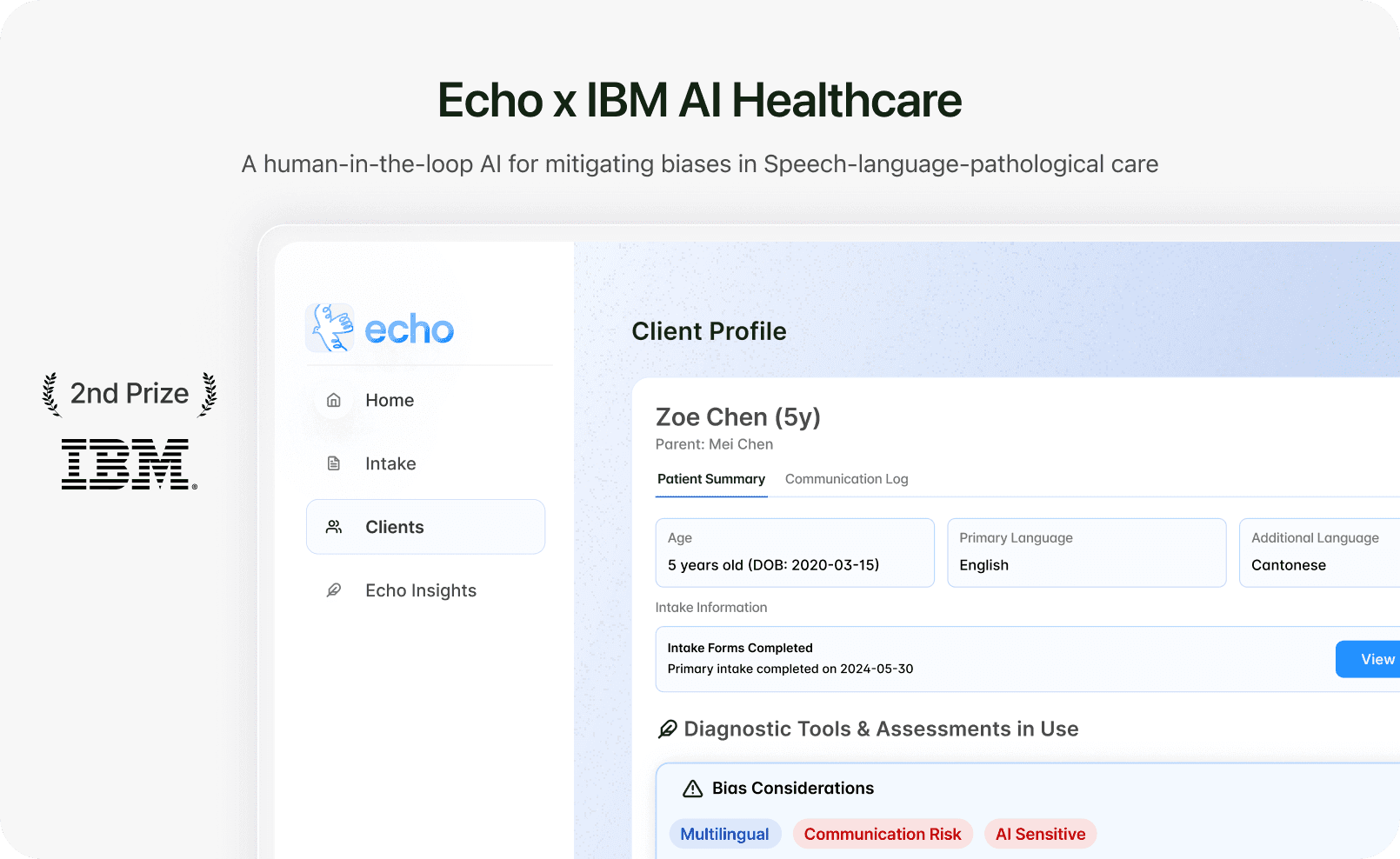
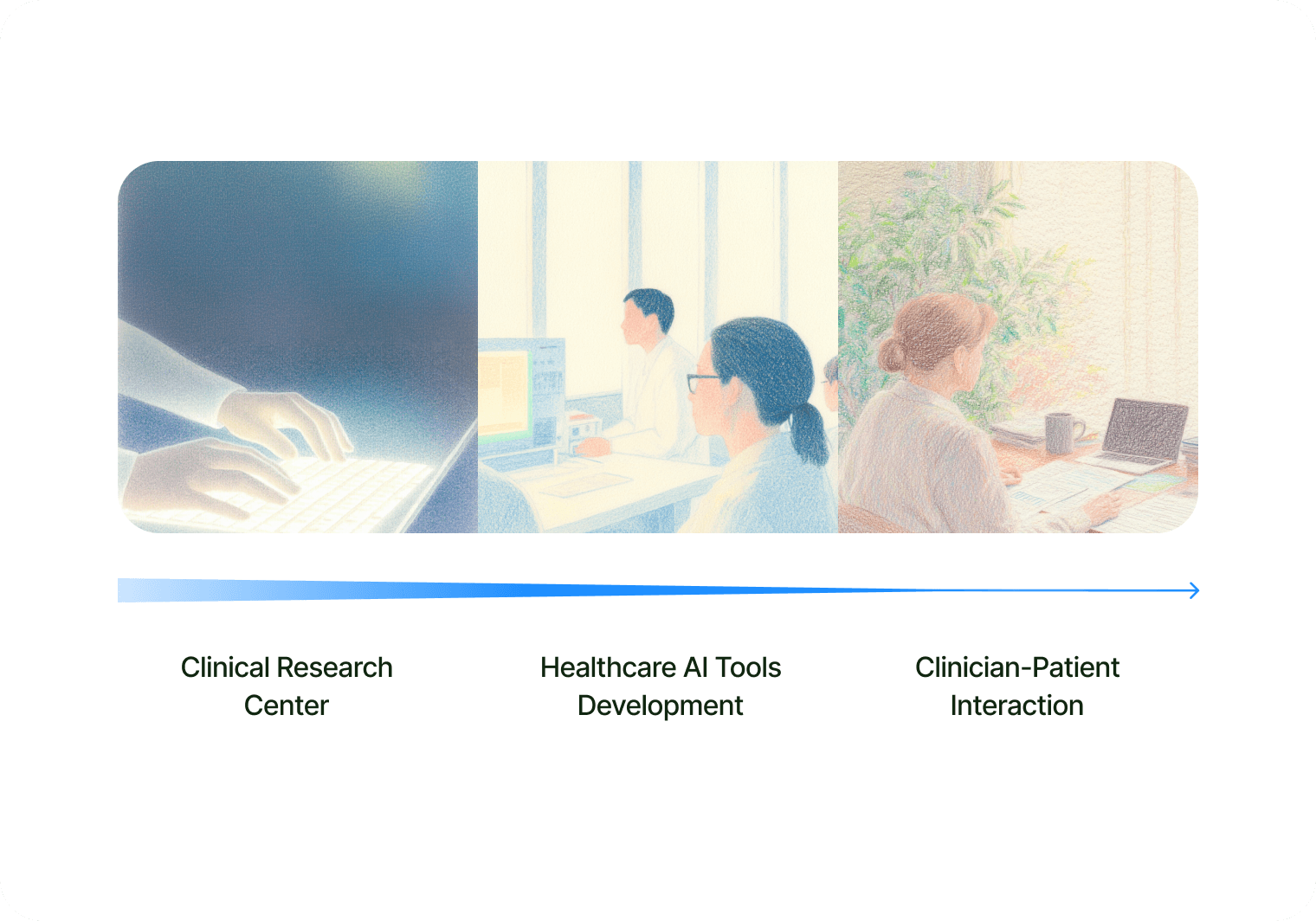
As a product designer on the UW HCDE team, we survived a 6-month (2025) competition held by a global Service Design Council with IBM. We built an AI system that is feasible, safe, and human agency focused for Speech-language pathologists. We focused on facilitating communication between clinicians and patients and increasing AI transparency for clinicians’ diagnosis and treatment.
2nd Prize 🏆
We won second place globally in a prestigious service design competition
AI with Human Agency
This project was a huge learning for me, building a product that is ethical and safe.
solution
Echo, where every Voice is shared to empower all
We built an AI empowered Saas software called Echo. Echo is a digital platform that facilitates transparent, ethical communication between speech-language pathologists and their clients around the use of AI.
01/ Main Features
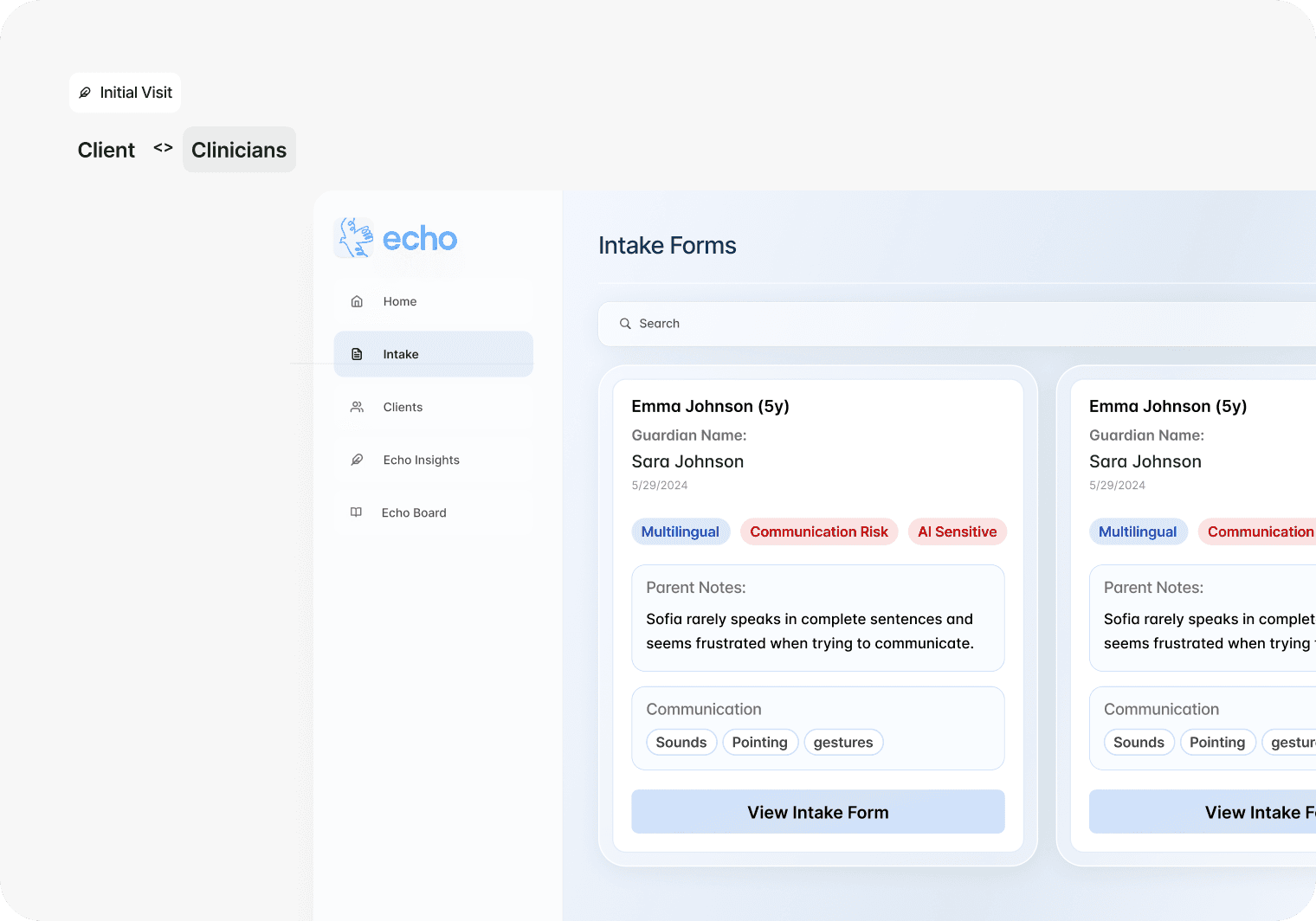
Feature 1- Echo View
Context-rich intake process to mitigate bias
Conventional intake process omits information information for patients with multilingual background. With Echo, intake process becomes more seamless, transparent, and clear for both clinicians and patients.
FEATURE 2- Research Echo Board
Bridging clinical bias and potential participants
Beyond diagnostics, it helps patients discover relevant research opportunities, empowering both patients and AI developers to co-create more inclusive AI systems.
FEATURE 3-Clinicians Insight Network
Healthcare AI needs guardrails, shaped by clinicians
Echo supports clinicians with a peer-driven network. Designed to address the biggest challenge, this community empowers clinicians to take greater agency in how they use AI, while fostering transparent, real-world conversations.
02/ Problem Space
Mission
1
Empower society to overcome bias
2
Create a people-centric, technology enabled, and business viable in the team's local context
Context setting
Finding where the healthcare bias is coming from
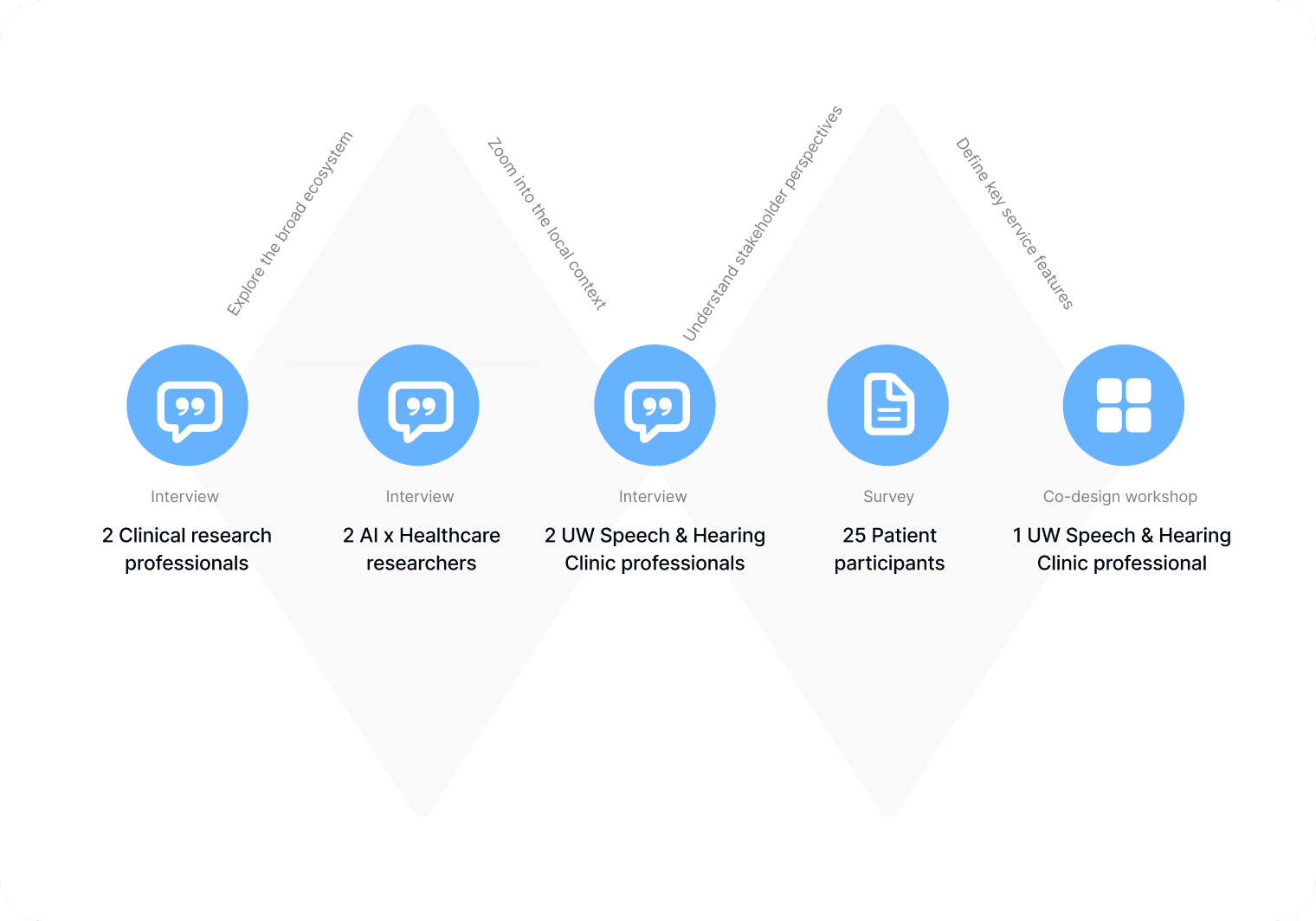
Based on our mission, we spent 4 months in total for researching a specific problem domain, interviewing diverse healthcare and AI experts.
Problem Scope
AI usage in Speech Language Pathology
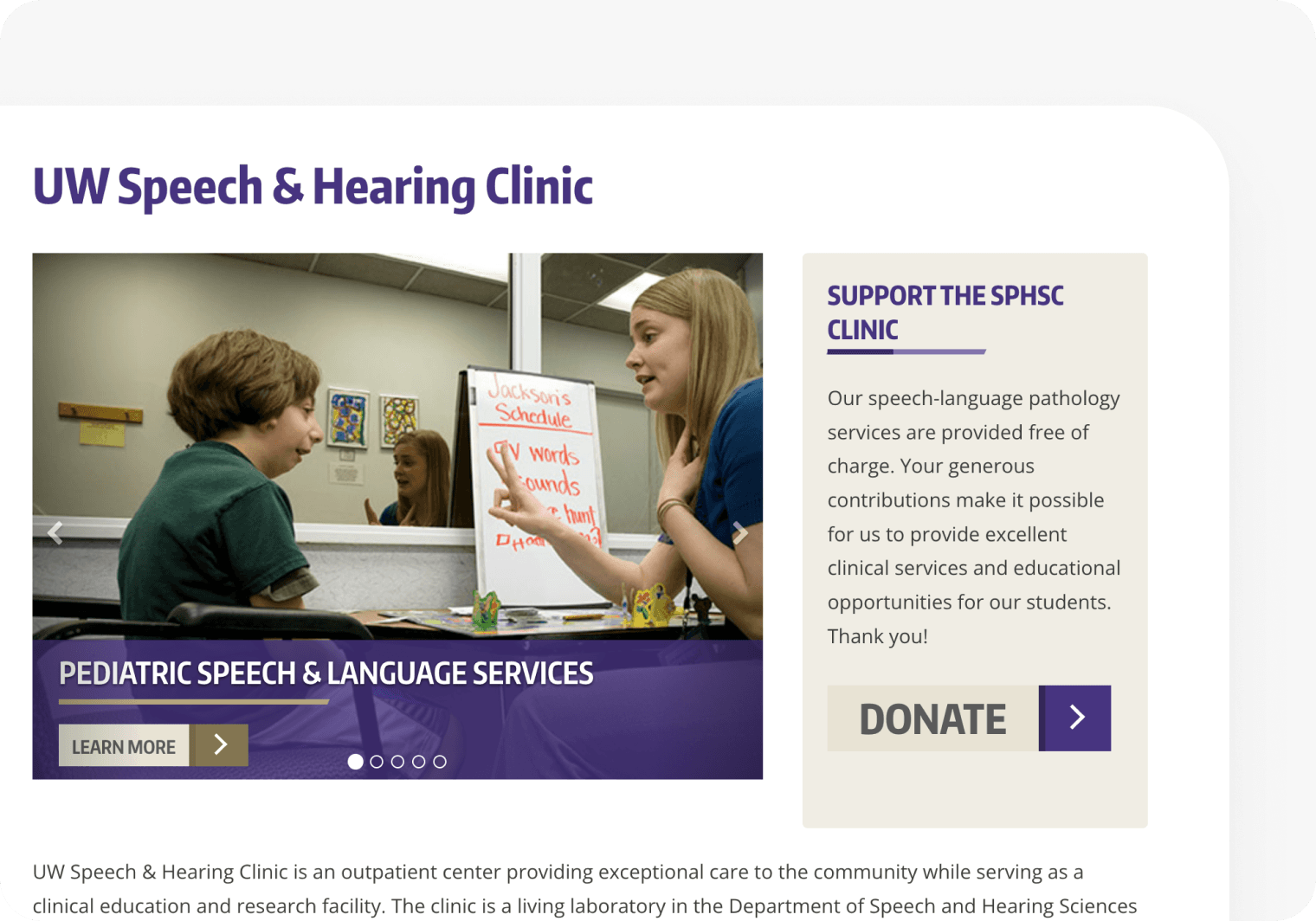
Through interviews with a Speech-Language Pathology (SLP) clinician at the UW Speech & Hearing Clinic, we discovered that while AI tools are already being used in clinical practice, there’s a lack of guidance around their ethical and responsible use.
Why it matters
SLP is a field where bias can significantly affect especially when treating patients with diverse languages, dialects, and cultural background. Yet current AI systems often fall short.
Why It’s Impactful
Large language models (LLMs) are increasingly entering the SLP space. A 2025 study in Frontiers in Digital Health found that most audiologists and SLPs see AI as beneficial for diagnosis and treatment, highlighting the urgent need for clinician-informed guardrails.
Identifying Key Issues
AI usage in Speech Language Pathology
Through interviews with a Speech-Language Pathology (SLP) clinician at the UW Speech & Hearing Clinic, we discovered that while AI tools are already being used in clinical practice, there’s a lack of guidance around their ethical and responsible use.
“Even we don’t fully trust standardized tests.
When we’re relying on an AI-based report, clinicians need to know its limits.”
-Clinician 1
Part of the In-depth Interview with UW SLP Clinicians (n=2)
“[I want to know] how it’s being used in my care- is it diagnosis or treatment etc. There should be full transparency so that clinicians can build trust with us.”
-Patient 2
Perception Survey on AI Usage in Healthcare, 2025 (n=25)
“When we compare [clinical scores] of bilingual kids to monolingual kids using [an AI transcription service], of course they score lower—but that’s not because they have a disorder.”
-Clinician 2
Part of the In-depth Interview with UW SLP Clinicians (n=2)
“If a doctor is using AI, I should be able to request a full report of the AI suggested diagnoses.”
-Patient 3
Perception Survey on AI Usage in Healthcare, 2025 (n=25)
clinicians' painpoints
Patients' painpoints
03/ Wireframes & Feedback
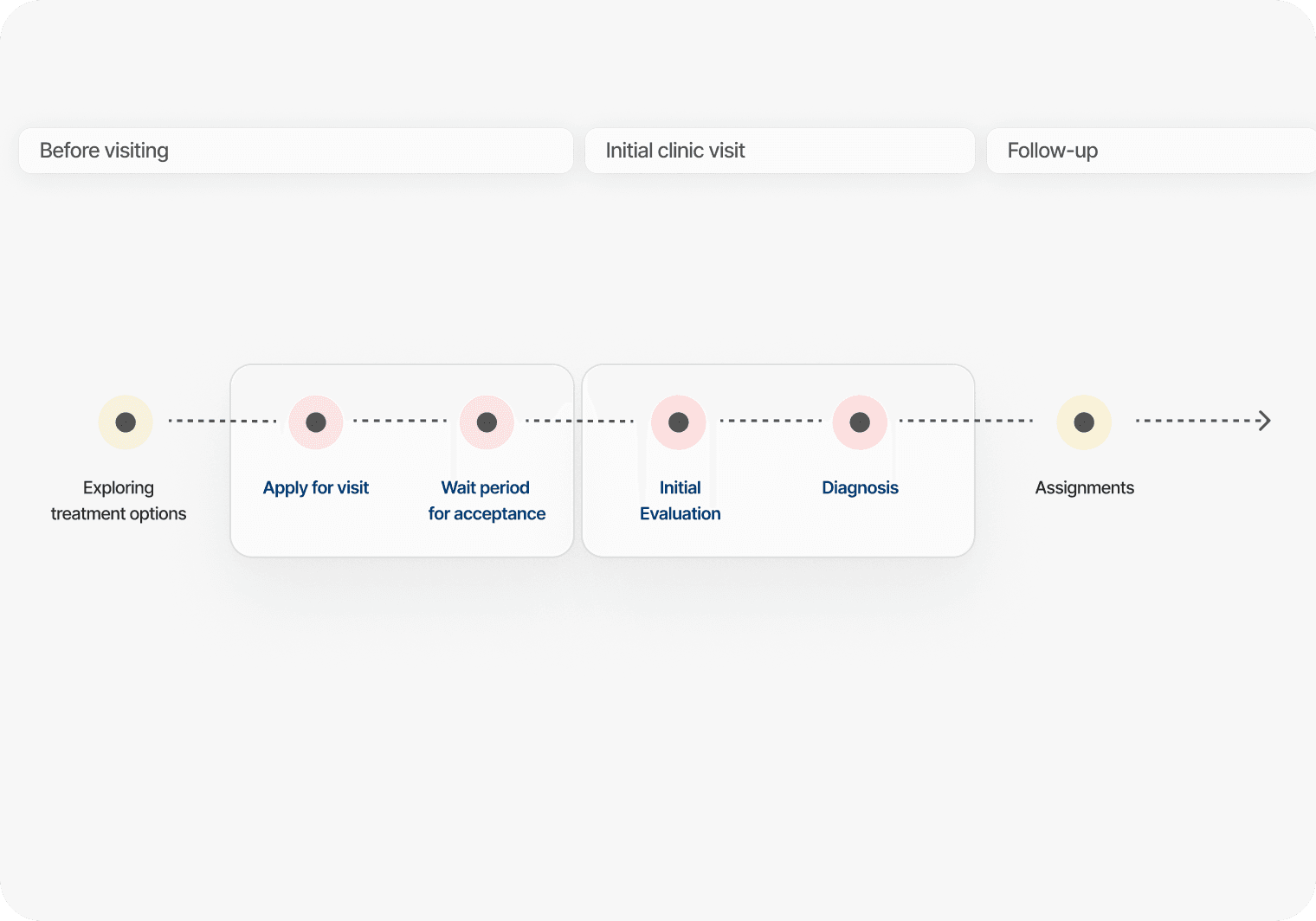
Key Touchpoints
Critical: Before & during the initial visit
We chose before visiting & initial clinic visit as main touch points. These initial moments are critical in patient and clinician relationship because this is where all the contextual data is heavily collected, which affects the first diagnosis, having a lasting ripple effect.
User testing
Learning from lived experiences
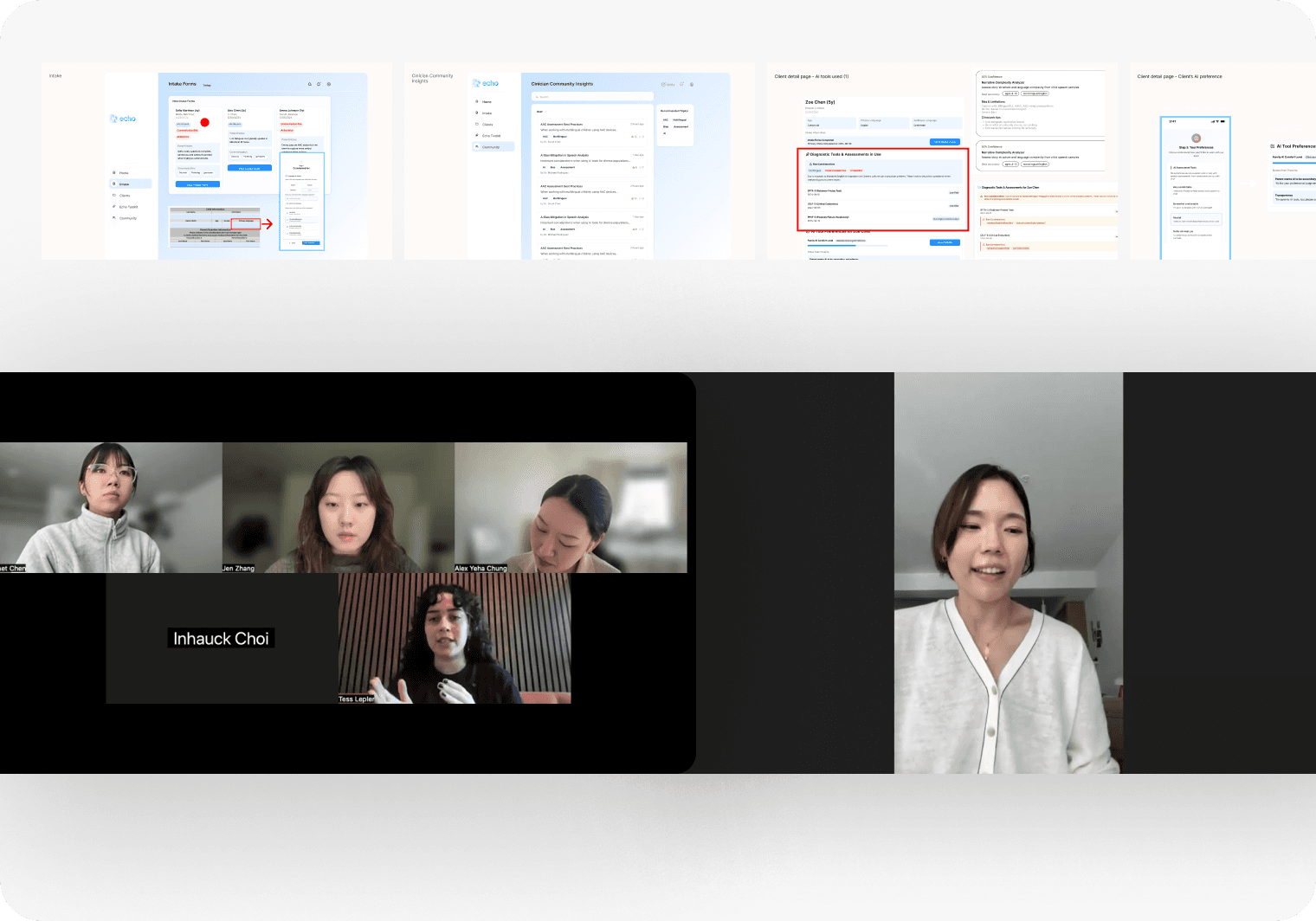
With our wireframe, we conducted UI evaluation session with SLP clinicians to identify missing points.
Takeaways
Want to dive deeper?
Explore more of my projects below.

Galaxy S23 Mobile Web UX
0-1 product design for product launch
Bubbly AI
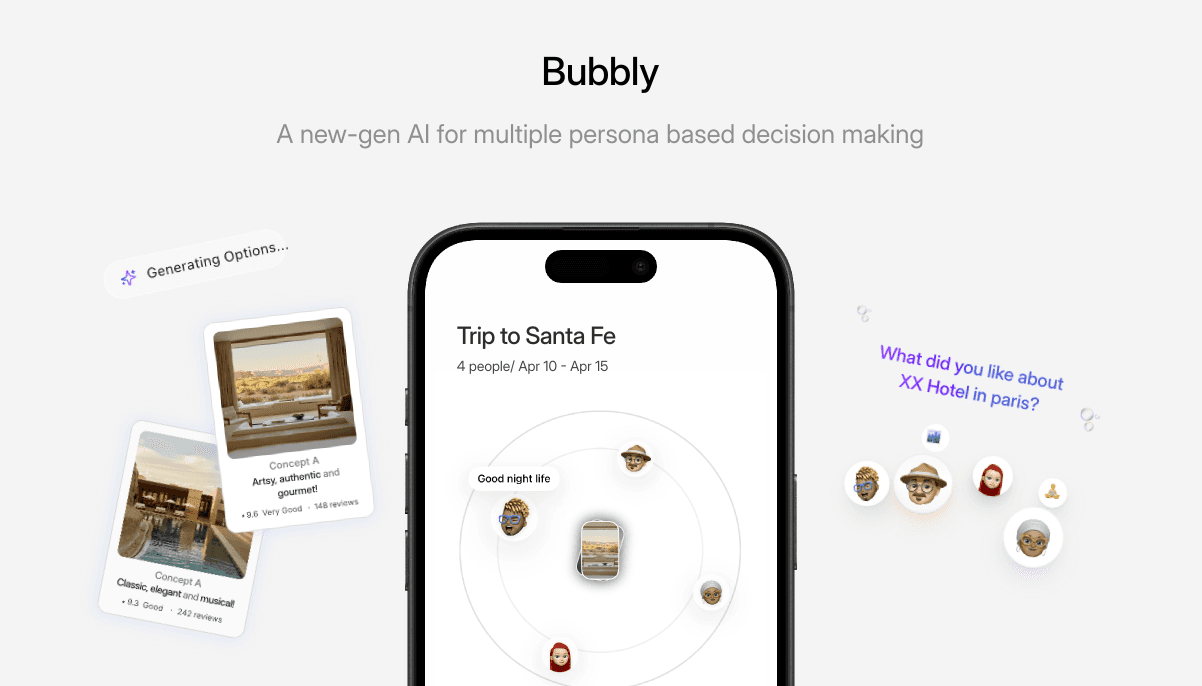
What if AI agents plan trips together?