

Weave is an app for opioid users to navigate a complex support system
With a doctor, we designed a mobile app "Weave" to help opioid drug users navigate the complex harm reduction services in a simpler, more intuitive way.
2024 PRODUCT DESIGN
Mobile
Healthcare
Design system
Overview
CLIENT
UPMC Center for Research on Health Care
Time
MAR - MAY 2024
Team
3 Designers
Role
Product Designer
My Role
This was a client-sponsored project in collaboration with a physician from UPMC.
My biggest contributions were:
Leading the end-to-end design process.
Designing the core user flows, wireframes, and the community review experience.
Defining the app’s visual identity, branding, and storytelling.
Solution
We Weave, We Live!
Weave is a mobile app that connects people who need harm reduction services (HRS) with local centers, empowered with transparent, easy access, and judgement-free information.

Outcomes
2
Opioid survivors interviewed
6 +
Medical professionals consulted
Presented to
UPMC directors & Pittsburgh City Council
Key Features
Feature 1 - Search
Find what you need in just a few clicks
On Weave, users can easily navigate a complex system with intuitive category and location-based search.

Feature 2 - Access
Bite-sized, easy-to-digest information
Based on our research with opioid addiction survivors, Weave provides visualized information that reduces cognitive load and supports easier decision-making.
Feature 3 - Anonymous Review
Real voices, powered by Weave community
Privacy matters to opioid users. Weave provides a safe space for them to share their unique experiences and contribute to the community.
Feature 4 - Live Chat
Be seen, be heard, get real support
Opioid users often find it difficult to make decisions on their own. Weave helps them connect with those who can provide local, case-specific help.
Context
Our client, Dr. Joudrey's team at UPMC, wanted to create a mobile app that helps people with opioid use disorder and their communities navigate the complex harm reduction system.

Problem

Research process
Because the problem space was unfamiliar, we resisted jumping into solutions. Instead, we began by deeply understanding the people, context, and existing healthcare ecosystem.

Secondary Research
With the difficulty of directly accessing the target audience, we gained key insights from the secondary research.

Areas of focus
Lack of real time data
Fear of being stigmatized
Need for holistic support
Problem statement
How might we
better connect people who use drugs
with local harm reduction service (HRS) centers by
Providing reliable information
Supporting their agency
Protecting their privacy
with the end goal of improving their quality of life as a whole?
User interviews
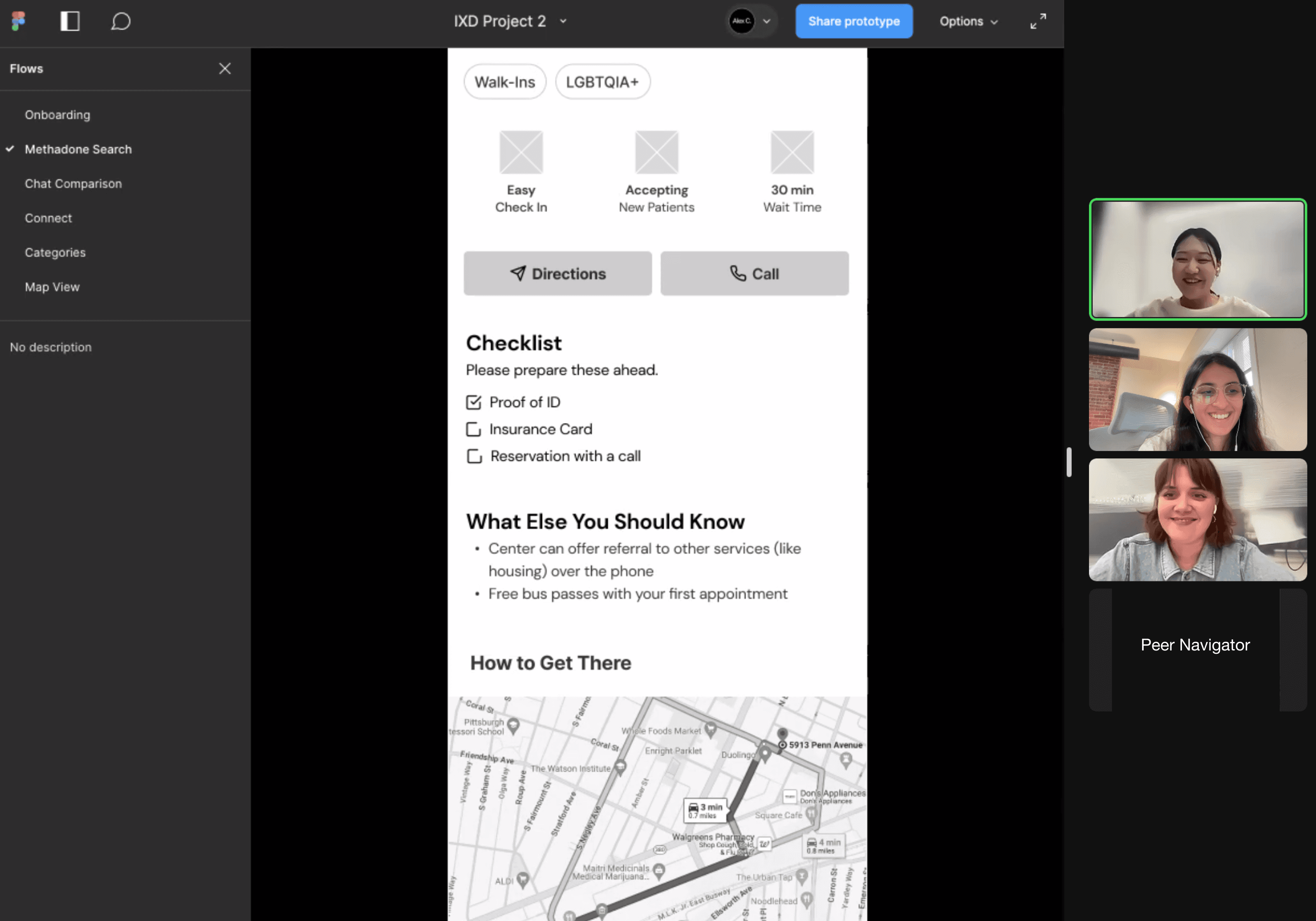
For the realistic insight and feedback, we conducted qualitative research with peer navigators.
Design iterations
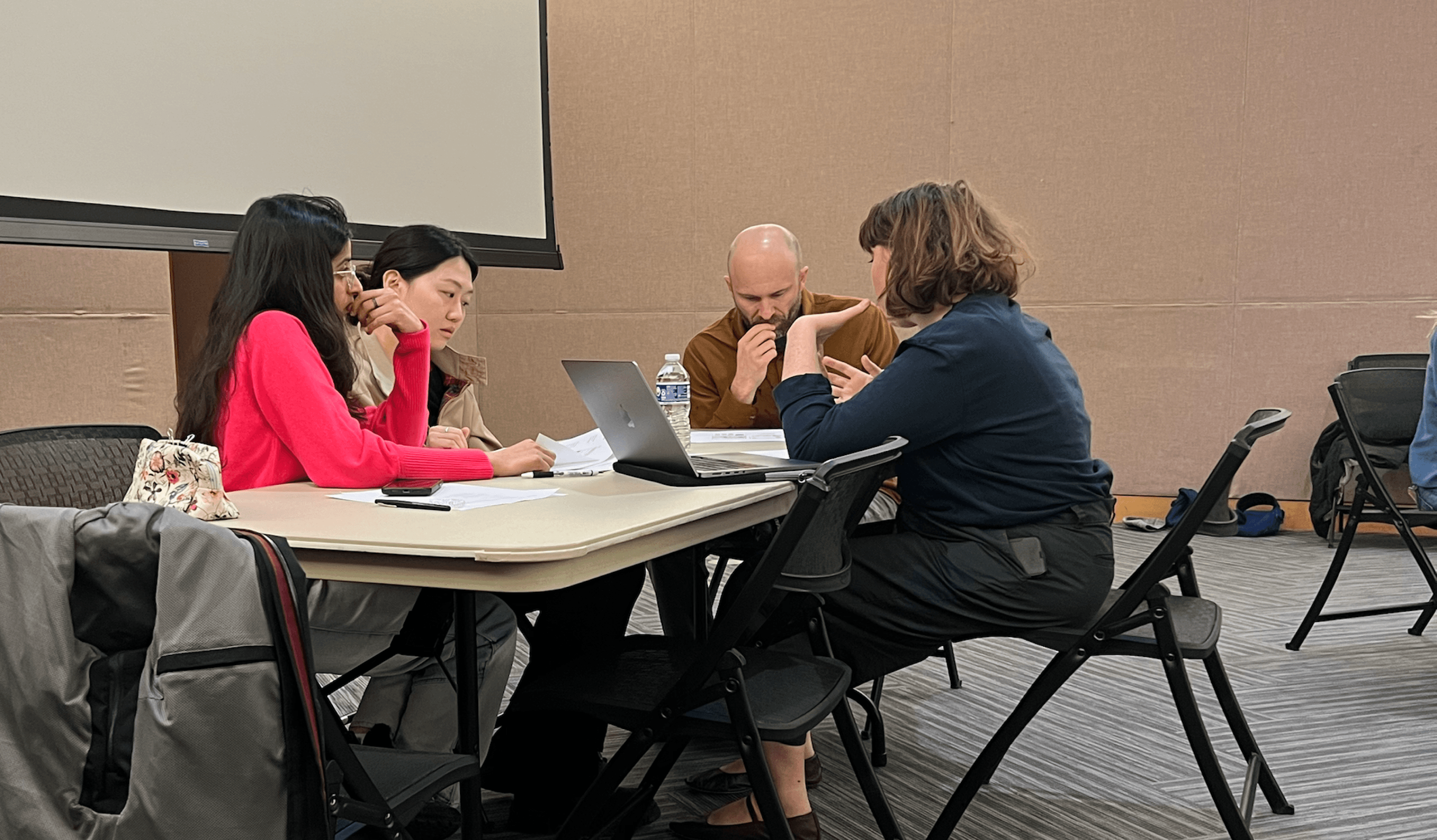
We went through multiple iterations working closely with our client and peer navigators.
Challenge 1. Categorization
Categories were not as useful as we thought
We organized the experience around the existing harm reduction system. However, users struggled because the structure reflected the healthcare system rather than their own mental models.

We simplified the information architecture and prioritized users' mental models over clinical categorization, making navigation more intuitive.
Challenge 2.Reviews & Ratings
Reviews were valuable only when they were trustworthy
Through user interviews, we learned that word of mouth was the primary way people evaluated harm reduction services. Trustworthy reviews therefore became a critical part of the experience.

I designed structured review templates that were simple to complete yet detailed enough to support informed decision-making. Every interaction was designed with privacy in mind, encouraging community engagement while preserving the anonymity users expected in a harm reduction community.
Challenge 3.
Chat interfaces should not feel transactional, but human
Our final iteration focused on humanizing peer support. Through feedback, we learned that labels like "This is a peer navigator" made navigators feel like a service rather than a real person. We redesigned the experience to emphasize the human connection behind every conversation.

We replaced clinical language, added a proactive prompt for users who hesitated to reach out, and redesigned the waiting state to clearly communicate that a real peer navigator was on the way.
Design System


Impact
The final design was well received by industry stakeholders, and our client moved forward with a grant application using Weave.

The final designs were presented to UPMC Harm Reduction Initiative directors and Pittsburgh City Council stakeholders.

Quotes from our final presentation!
Reflections
Detail communicates trust & empathy
Working closely with people navigating harm reduction services taught me the unforgettable lesson of designing with users, not assumptions. Each iteration brought us closer to their mental models, helping us create experiences that felt more trustworthy and empathetic.
