01/ Problem
Background
Voice Recognition to Empathetic AI
AI is becoming a big part of our lives. It was shocking to see that it reached a point where it can understand human emotions. Inspired by Hume AI, we imagined a conversational AI integrated into Spotify.
Process
We focused on rapid prototyping based on user feedback
02/ Research
User Interviews
What are the user needs?
In order to learn about the current listening experience of Spotify and identify user needs, we interviewed 2 active users of the Spotify. The main questions focused on: - How users handle negative emotions. - How users perceive AI voice assistants.

Key Findings
AI was perceived to be useful, only when given agency
Survey
Based on the interviews, we conducted additional survey with 30+ participants. Through this, we identified key design opportunities.
Design Opportunities
Users want AI that provides support, not an interruption
03/ Concept Development
Interaction Flow
Drawing out Human-AI interaction flow
We redefined the core interaction flow of our AI
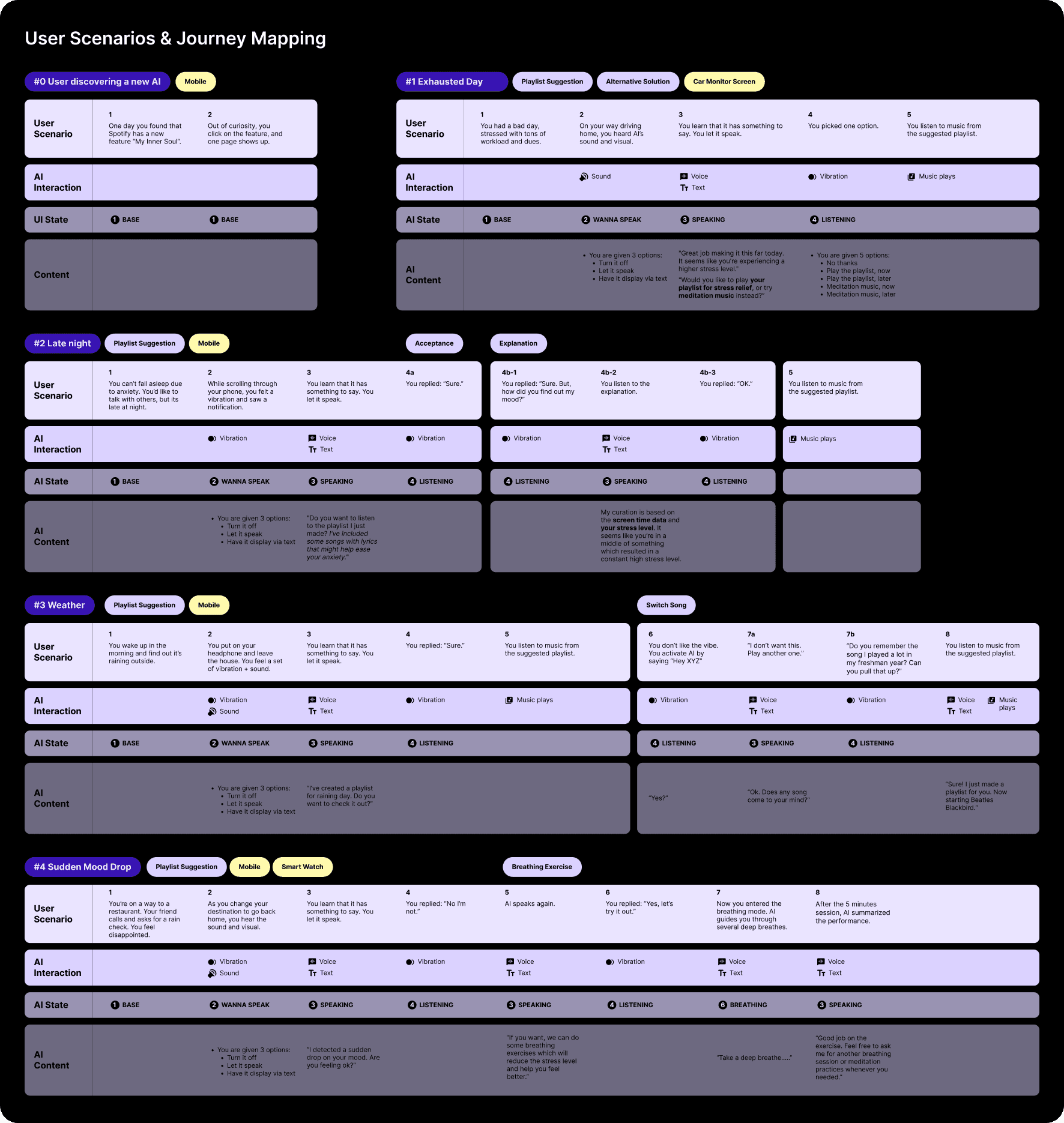
User Scenario
Exploring key features in context
Based on our first round of research, we explored key touchpoints based in five user scenarios. We then gathered user feedback on how users prefer the AI to react in different situations.
AI Brand Identity
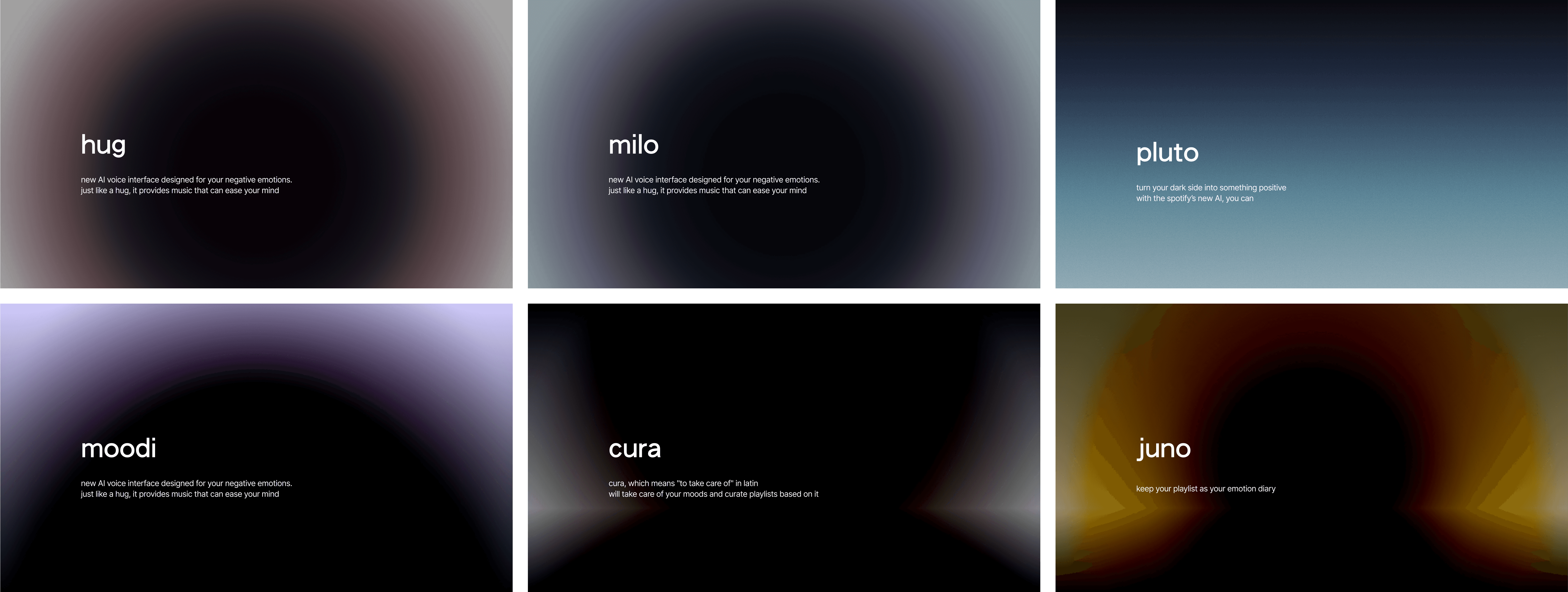
Gentle, Caring and Personalized AI
Based on the collected insights, we created an AI persona representing the needs of target users. Users wanted AI to be non-intrusive, caring and more supportive in their music listening experiences.
Lo-fi prototype
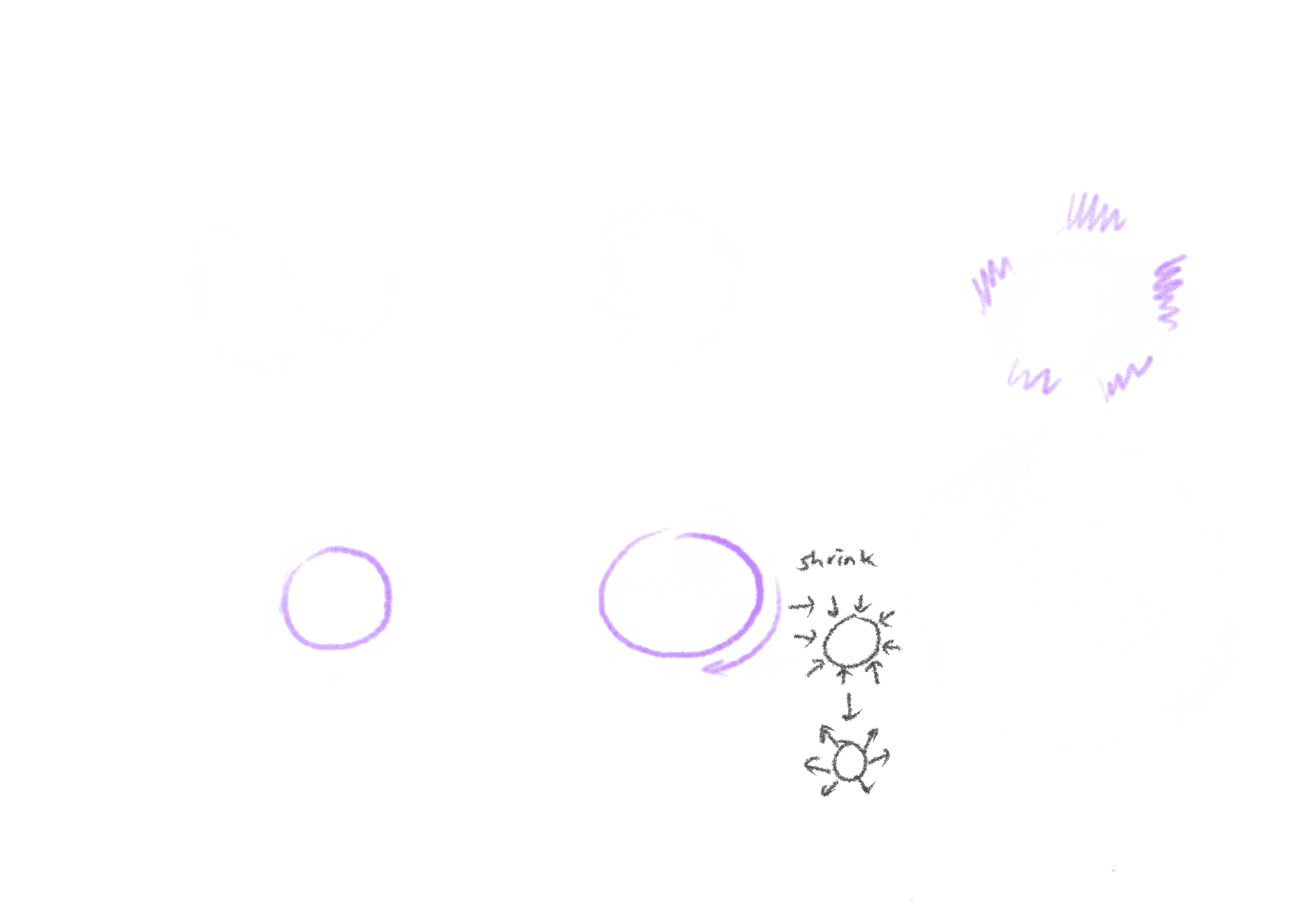
Voice User Interfaces (VUI) States
For key interactions, I sketched and iterated AI motion designs to represent VUI states.
04/ Iterations
Usability Testing
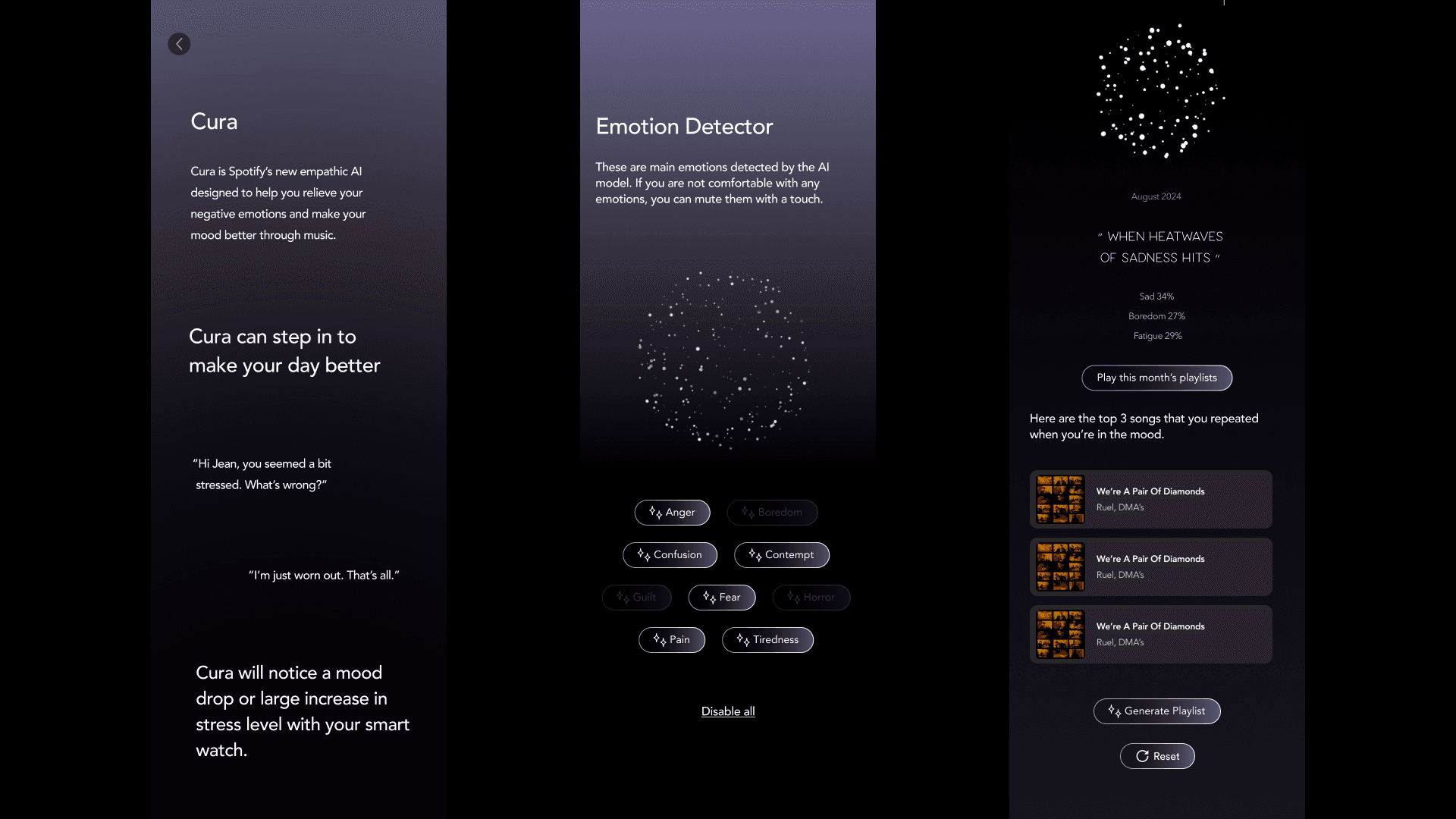
We conducted user testing with mid-fi prototypes
Based on the prototype, we conducted user testing with five participants to walk through the overall flow of the new feature.
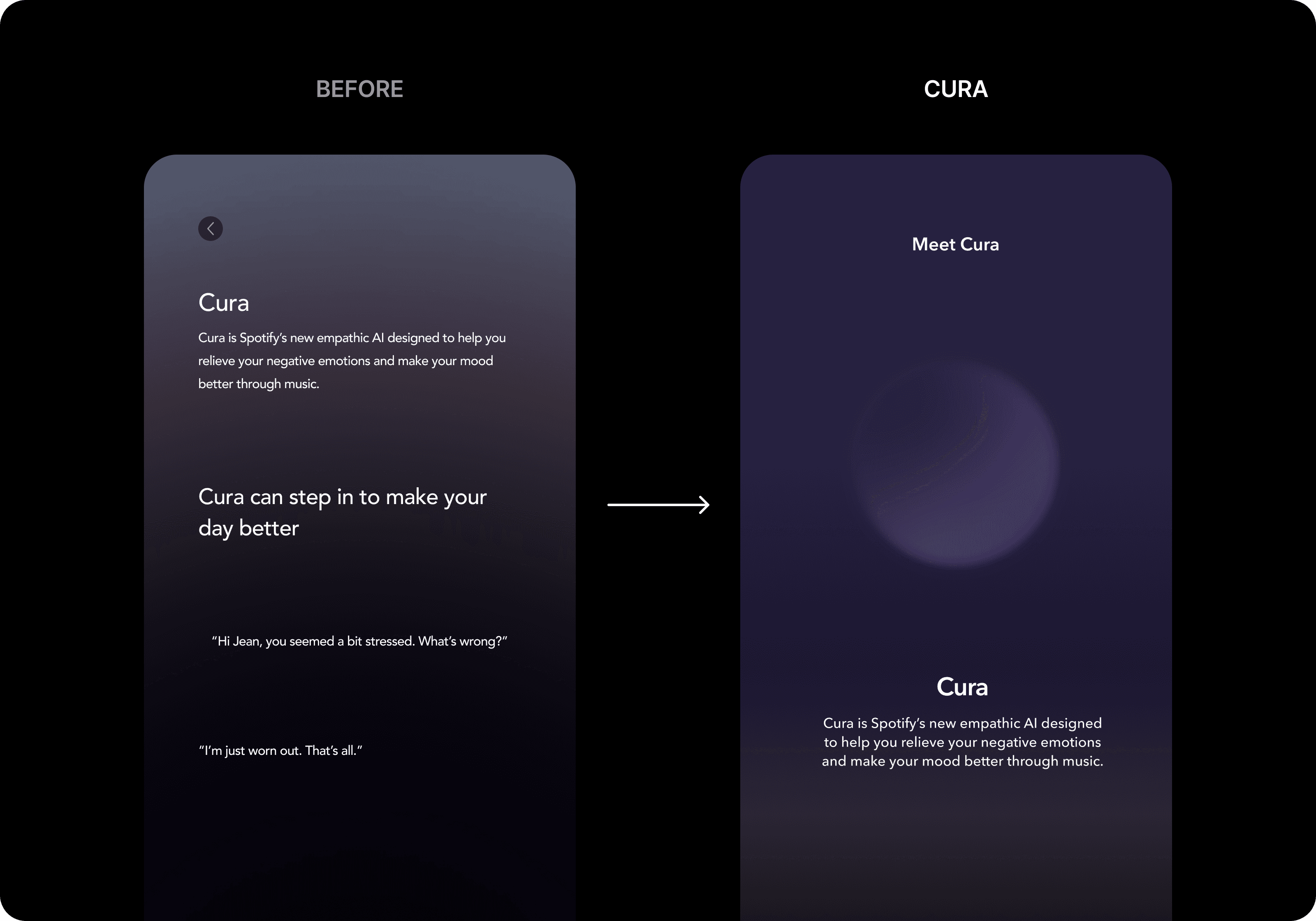
Solution 1- Design Consistency
Refining visual and interaction patterns for design consistency
Since our goal was to integrate with the Spotify app, we aligned our interaction style to match its native experience.
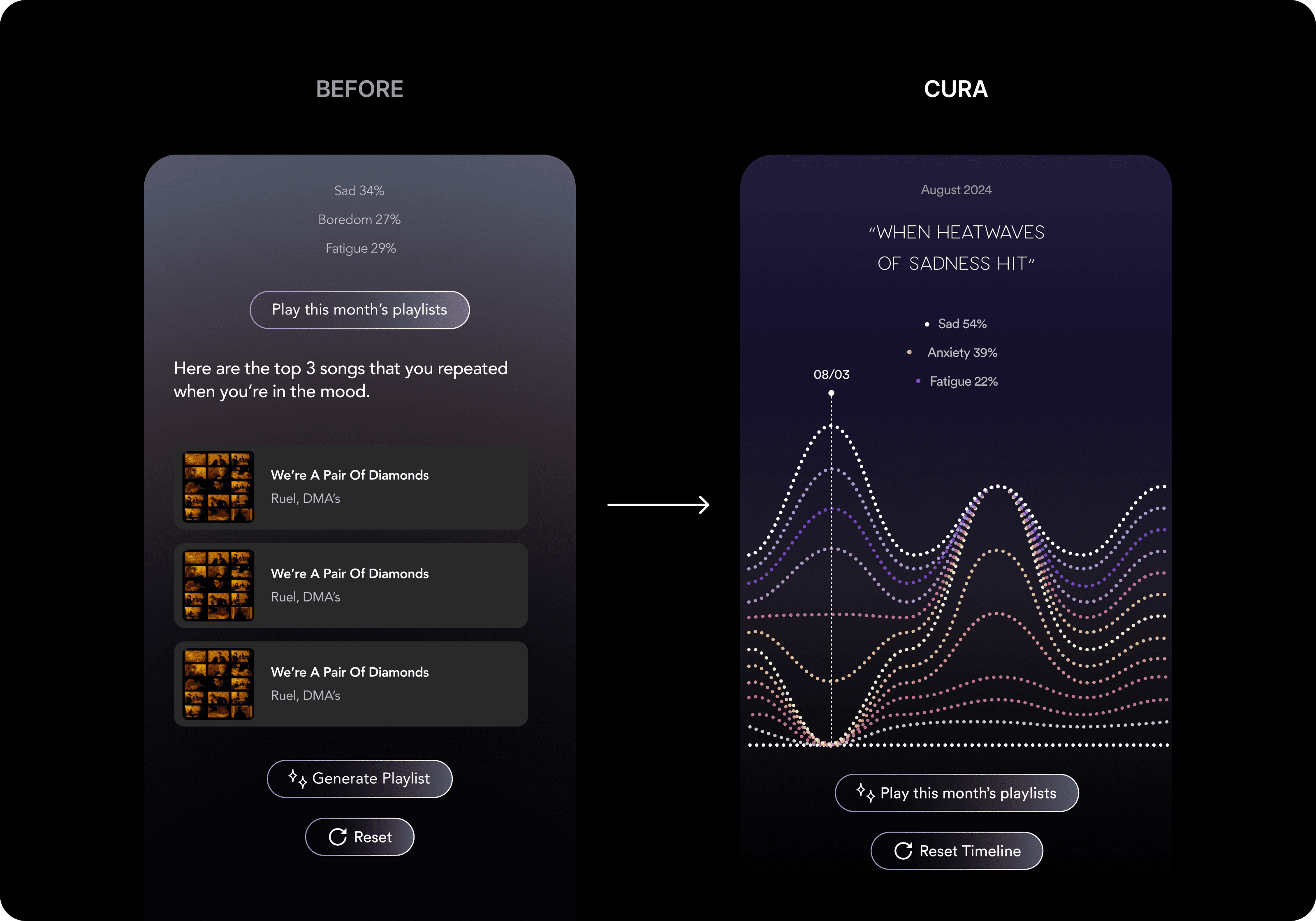
Solution 2 - Simplicity
Simplifying interfaces by prioritizing the key user action
The initial placement of multiple buttons led to user confusion, so we focused on streamlining the user flow for greater clarity.
Final prototype
We conducted user testing with hi-fi prototypes
For key interactions, I created 6 AI motions representing vui states.
Final prototype
Mobile App Screens
For key interactions, I created 6 AI motions representing vui states.
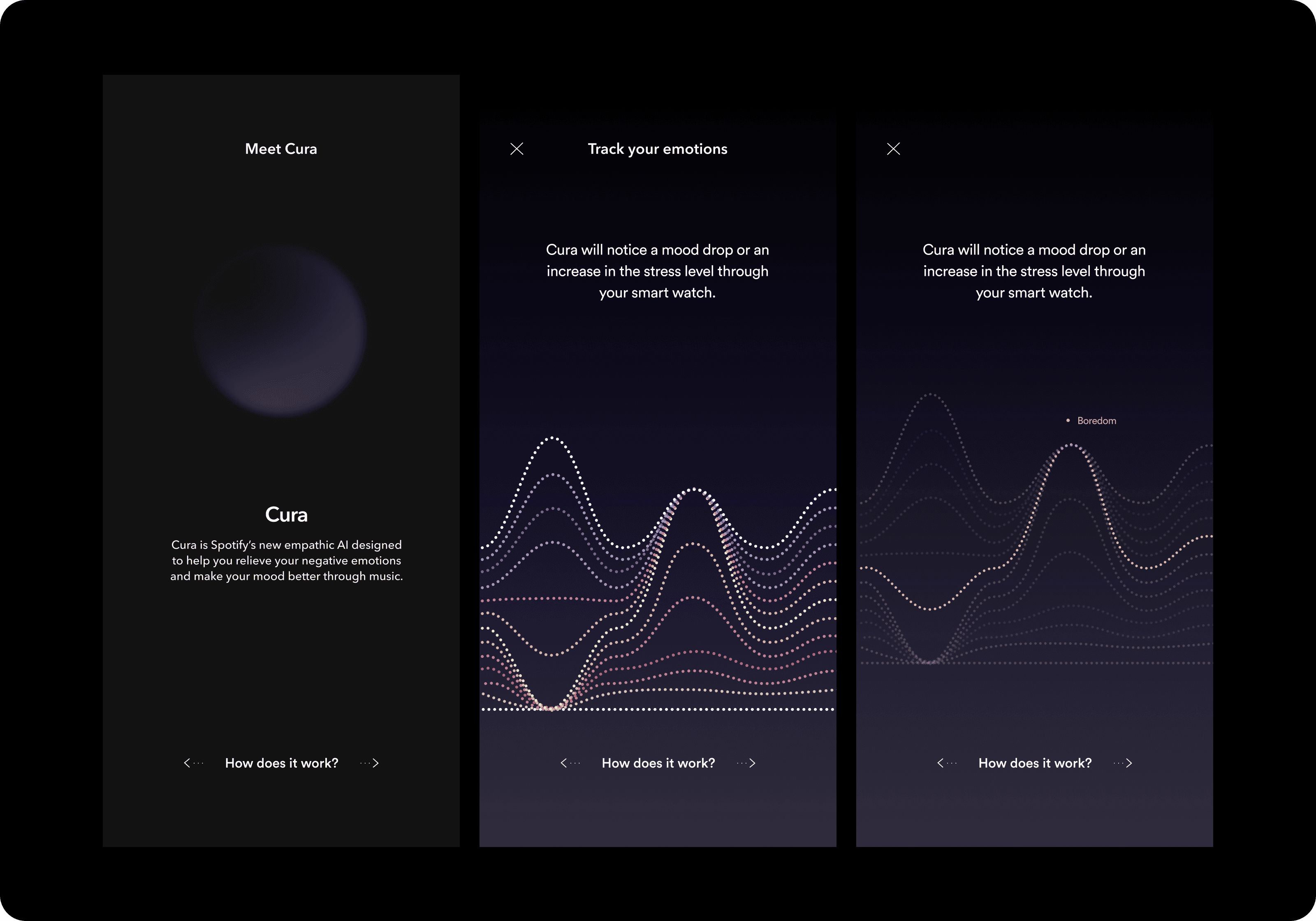
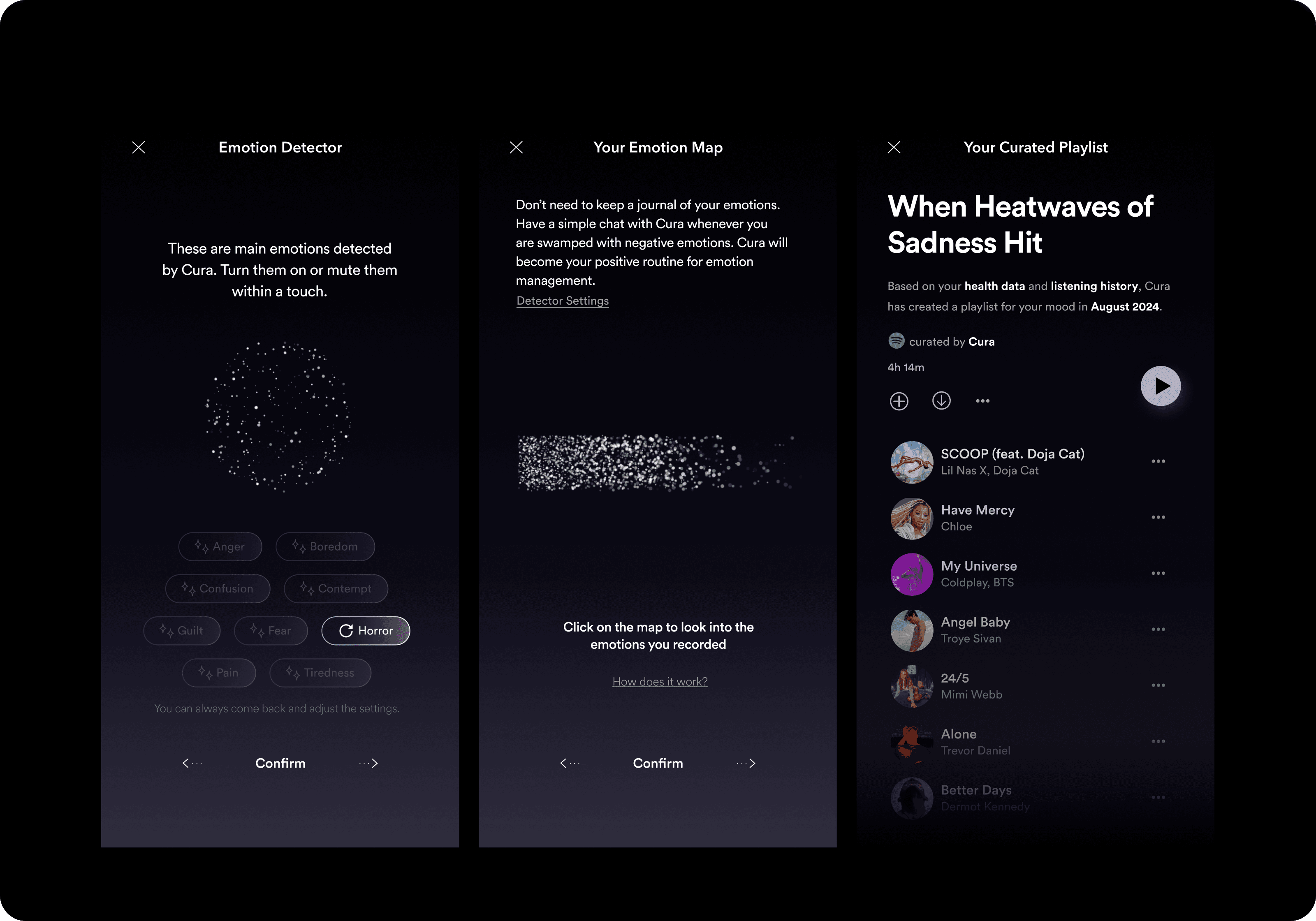
04/ Impact
Public Showcase
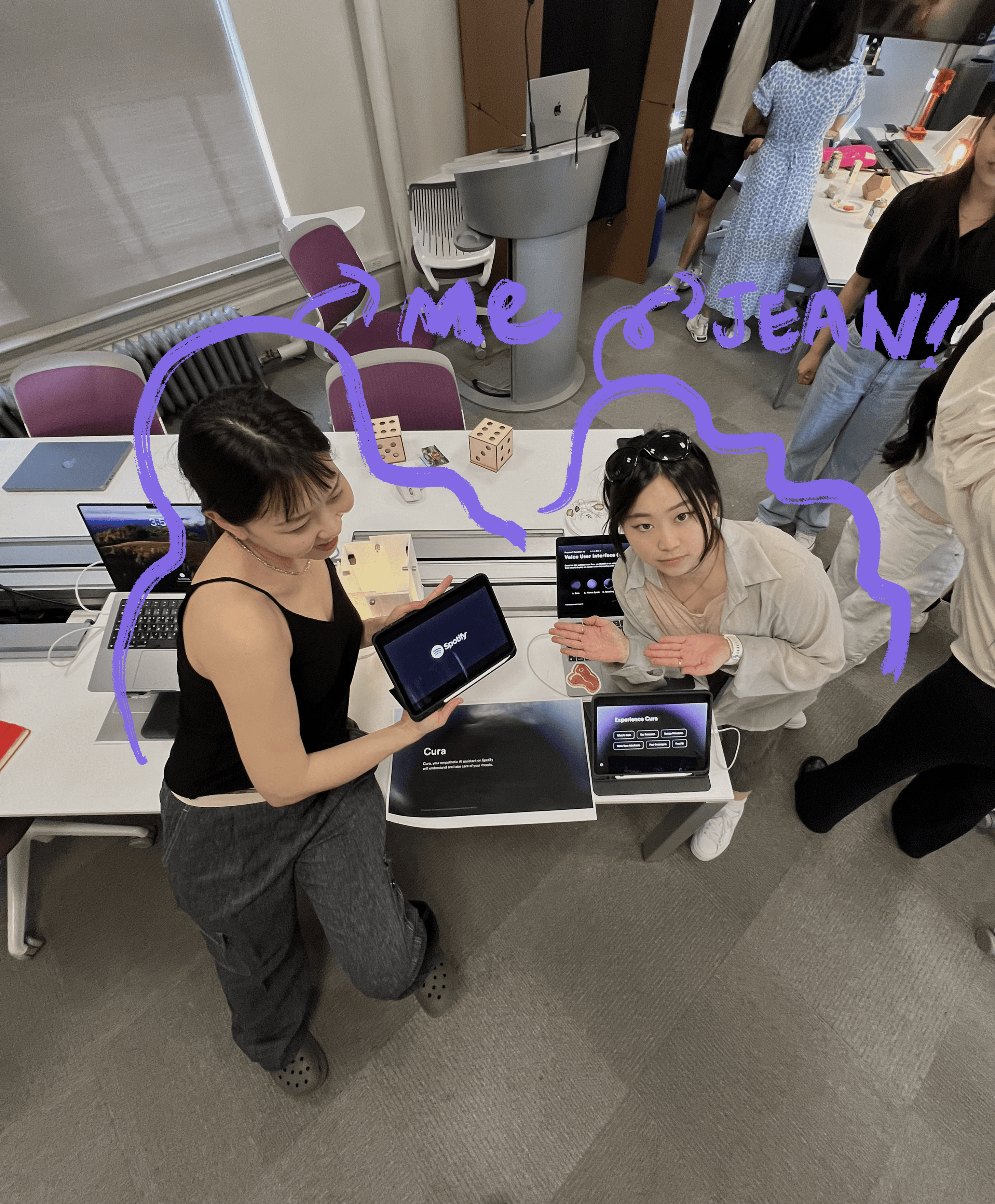
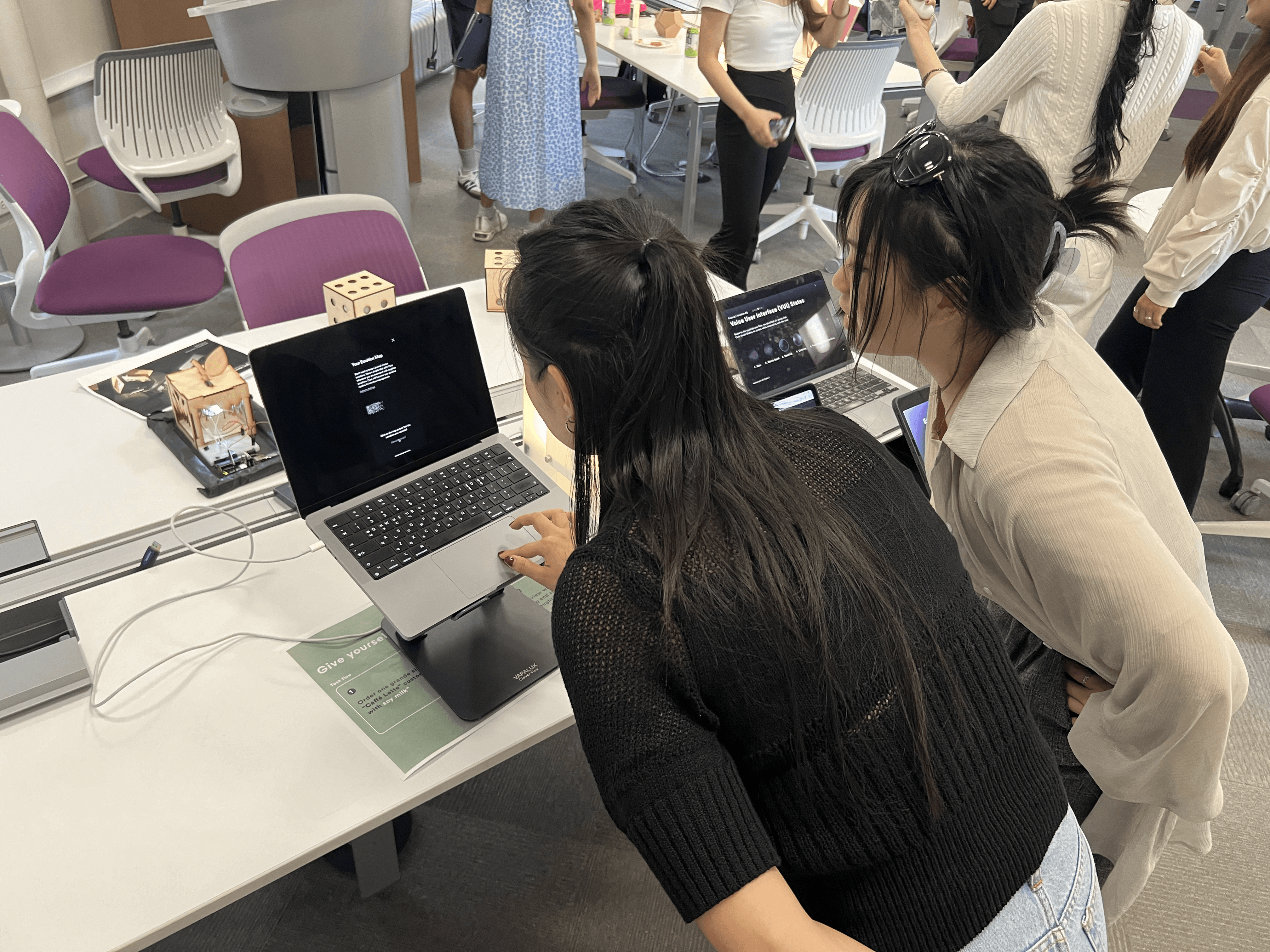
School of Design Showcase
At Carnegie Mellon University, Cura was showcased and presented to the public. Many audiences loved our idea and gave valuable feedback on our designs!
05/ Takeaways
Want to dive deeper?
Explore more of my projects below.
Bubbly AI
What if AI agents plan trips together?
Echo X IBM 2nd Prize
Won B2B AI Global service design competition